I had given myself two weeks to build a digital product or services based on my own vision, research, findings and the UX/UI process I’ve learned throughout the program. Creating either an App, a responsive website or a product integrated within a service.
Of the three options I had presented myself in terms of what client I wanted to work, Issa’s Pita Chips.
I found the story behind the creation of the brand rather interesting and I was also looking for personal redemption in myself for a similar project, real-world client I undertook a few years ago during an internship that frankly came up lacking; so a good deal of my stake in the choice for this project is to motivate myself to revisit this type of problem this genre of brand has again and do better this time around.
To get started, like any other project, a UX Strategy Guide was used in order to plot out hypothesis's of what kind of problems and potential solutions can be explored throughout the process.

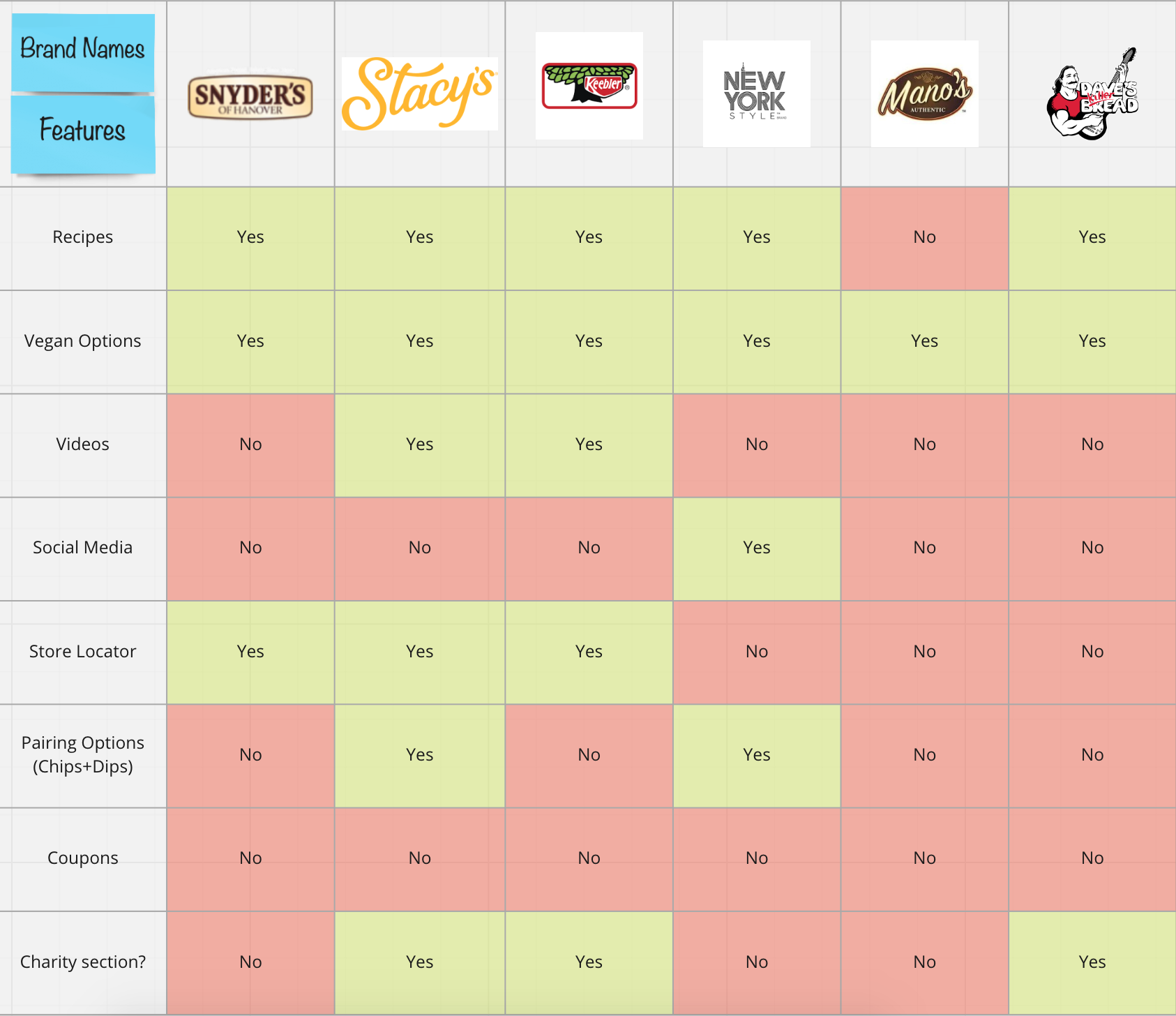
After the project path was plotted out with the UX Strategy Canvas, we would take a look at the competition with this chart and see if anything stands out. Right away we see that the majority share Recipes, Vegas Options, and Store Locators. With this in mind, I went on to the next step.

After plucking features these competitors had in common, it was now time to find out where Issas' Pita Chips could stand apart from everyone else. I created this Market Positioning Chart in order to find a potential Blue Ocean to have this product stand out and achieve its full potential.
Now comes the fun part. Following the potential Blue Ocean position being established, I set out interviewing people to gather data for the following steps.
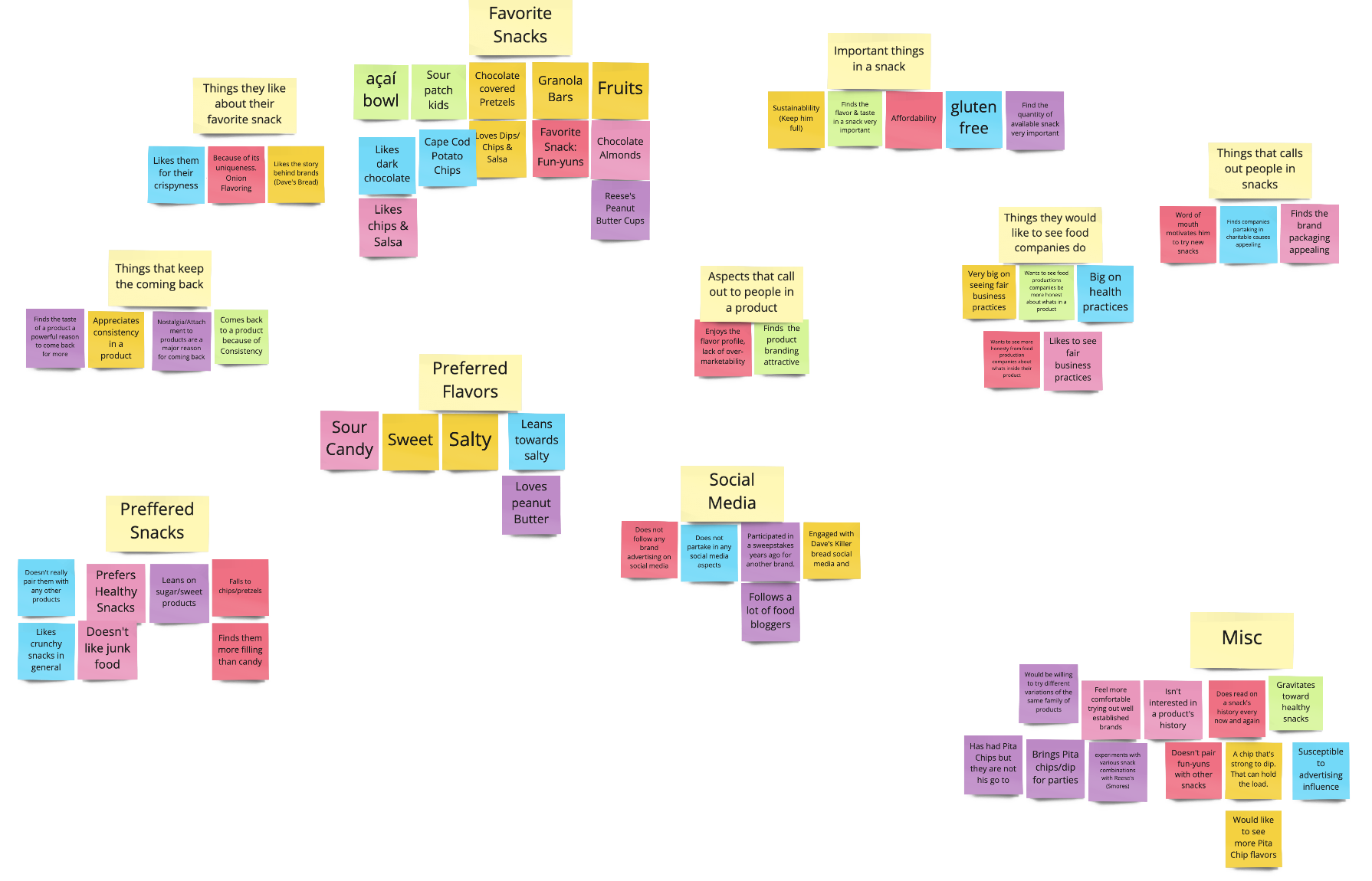
After 13 interviews, I obtained all the necessary qualitative data to proceed into figuring out how best provide value with Issa's brand.
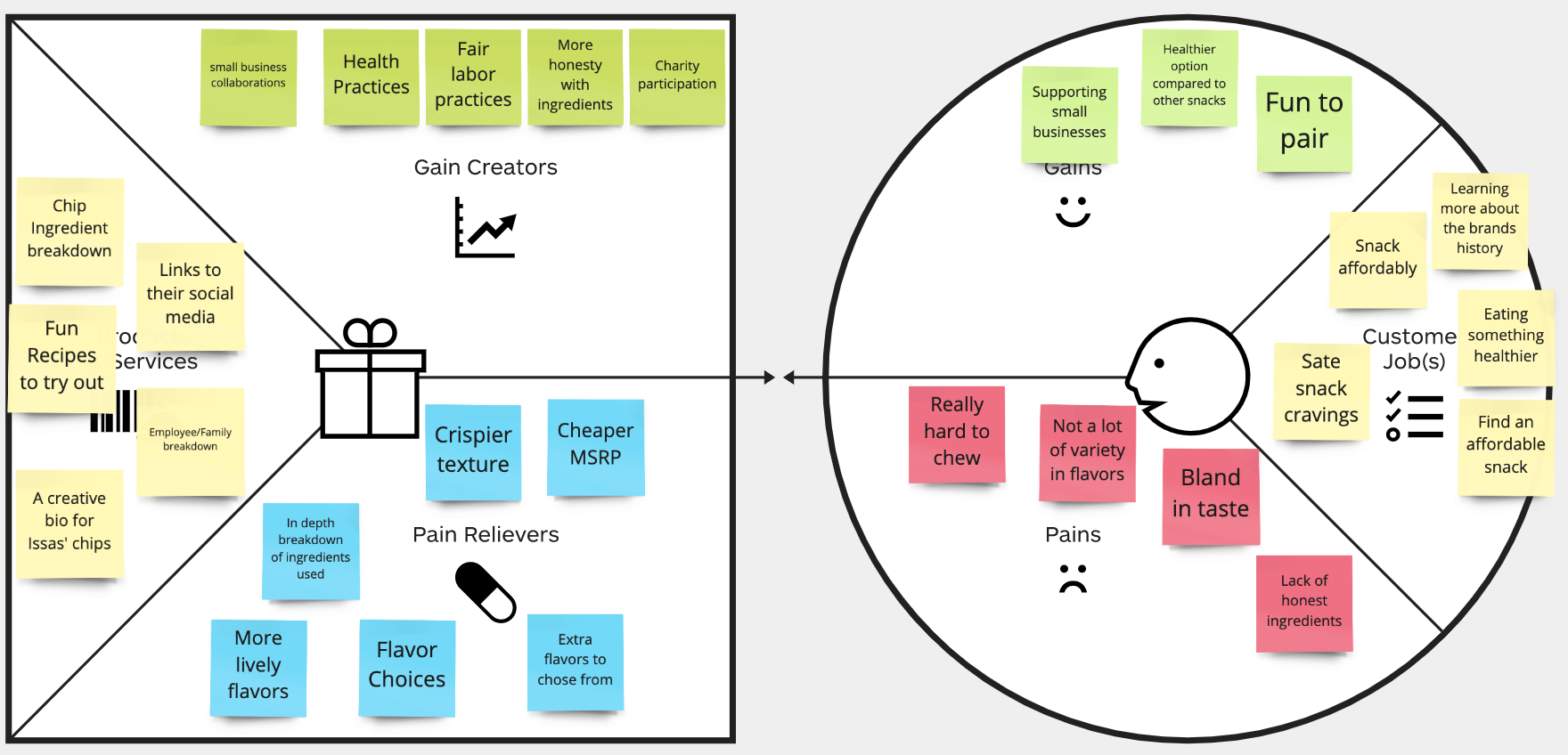
With the information gathered from the Value Proposition Canvas and the affinity mapping, the time has come to give this hypothetical customer a character.
Enter the User Persona.
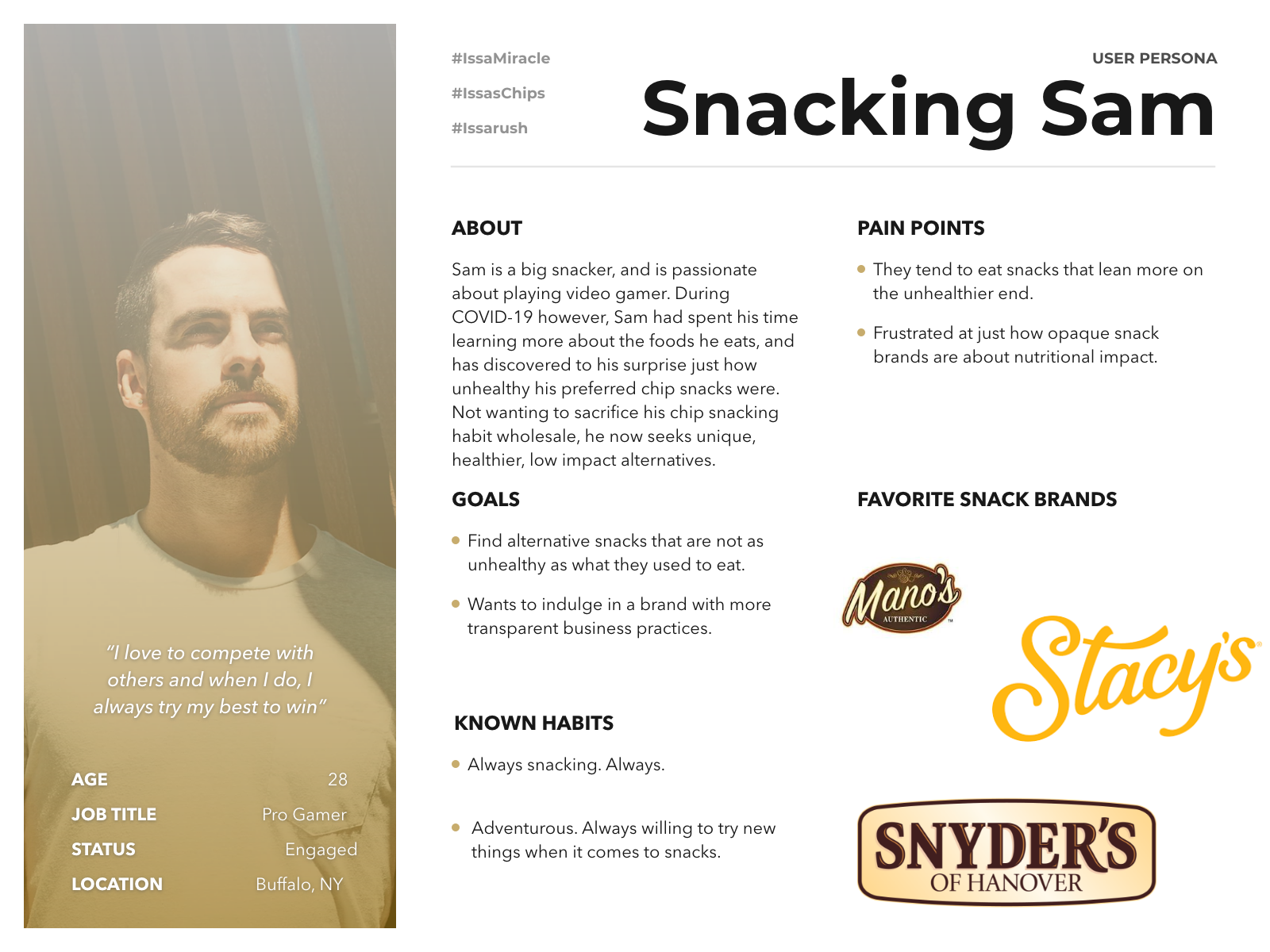
Now with a hypothetical user created, it is time to plot out how the user's journey to the intended product may look like.

Following the last example, the the User Journey will help identify key problem areas that need to be addressed for our snack man, Snacking Sam.
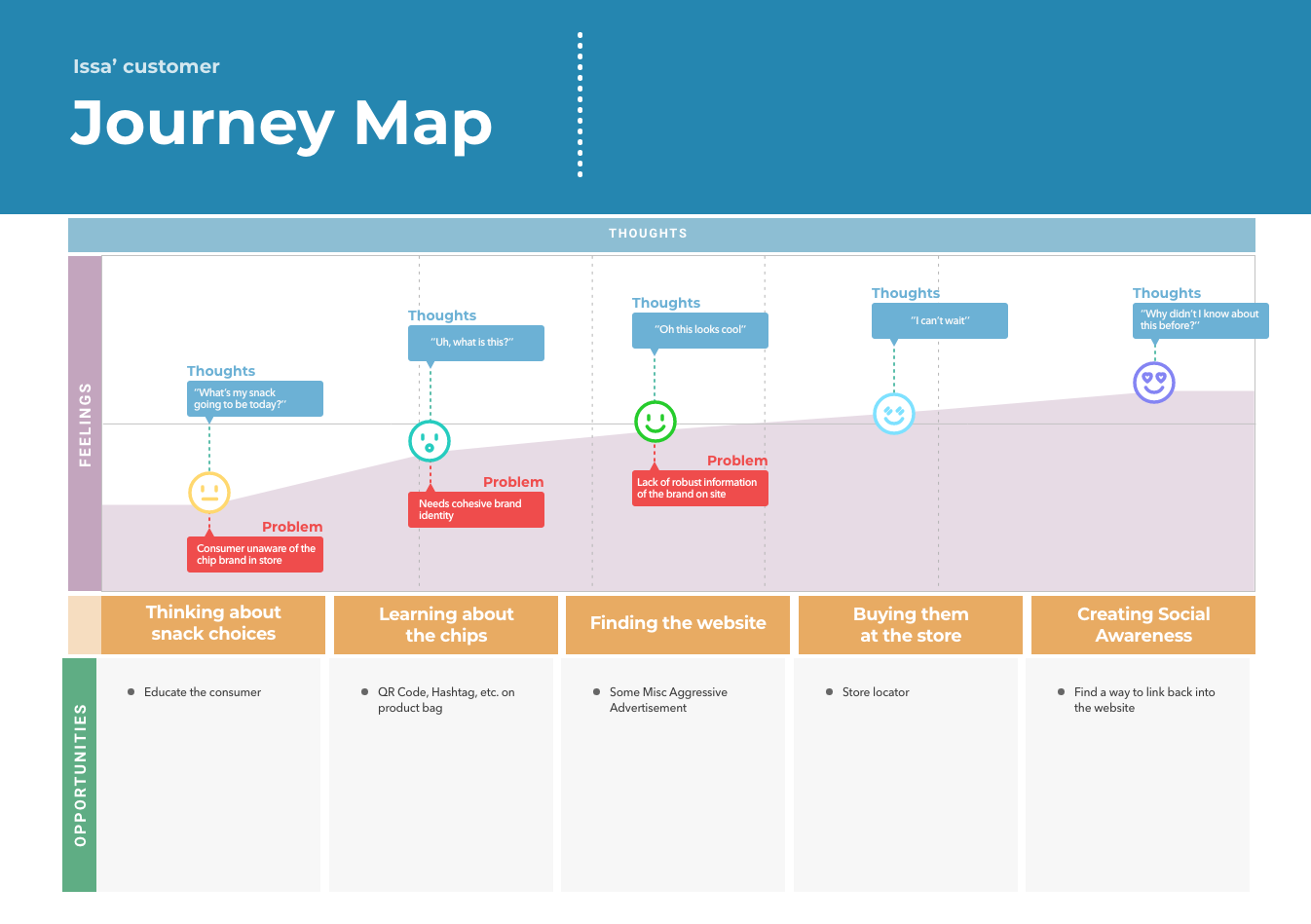
With key information about our User Persona's journey through the experience of the product, Problem Statements were then generated as follows.


To address these three key problem statements, the process of ideation could finally begin to take shape.
Now with our ideas in order, I started to organize them from least, to most important using the following chart. With this, I would prioritize what needs to be implimented immediately, and what can be done down the road.

With all these features organized, it was time for me to established what was the project's MVP. I wrote it as follows:
MVP is a redesigned website for Issa's Chips with a focus on brand transparency, and participation within the Issa' Chip experience; that all the while increases public exposure to Issa's brand.
Our user persona are frustrated because of the lack of transparency, and unhealthy found in their other preferred pita chip snack products.
If we can solve this problem, it would positively impact our user base because the can keep indulging in their snack habits, and benefit our business because it would increase business/brand awareness.
With all the previous stuff in mind, I quickly made a Simple graph of how the User may end up traversing through this new product.

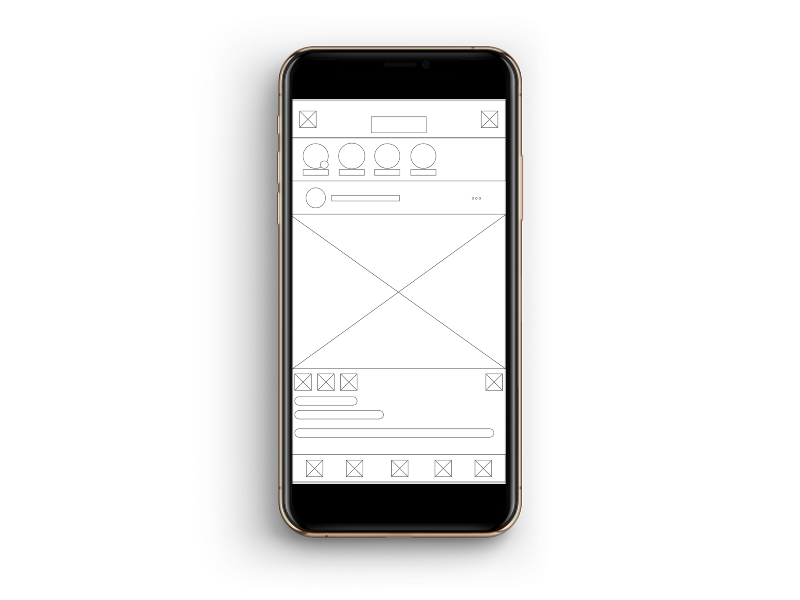
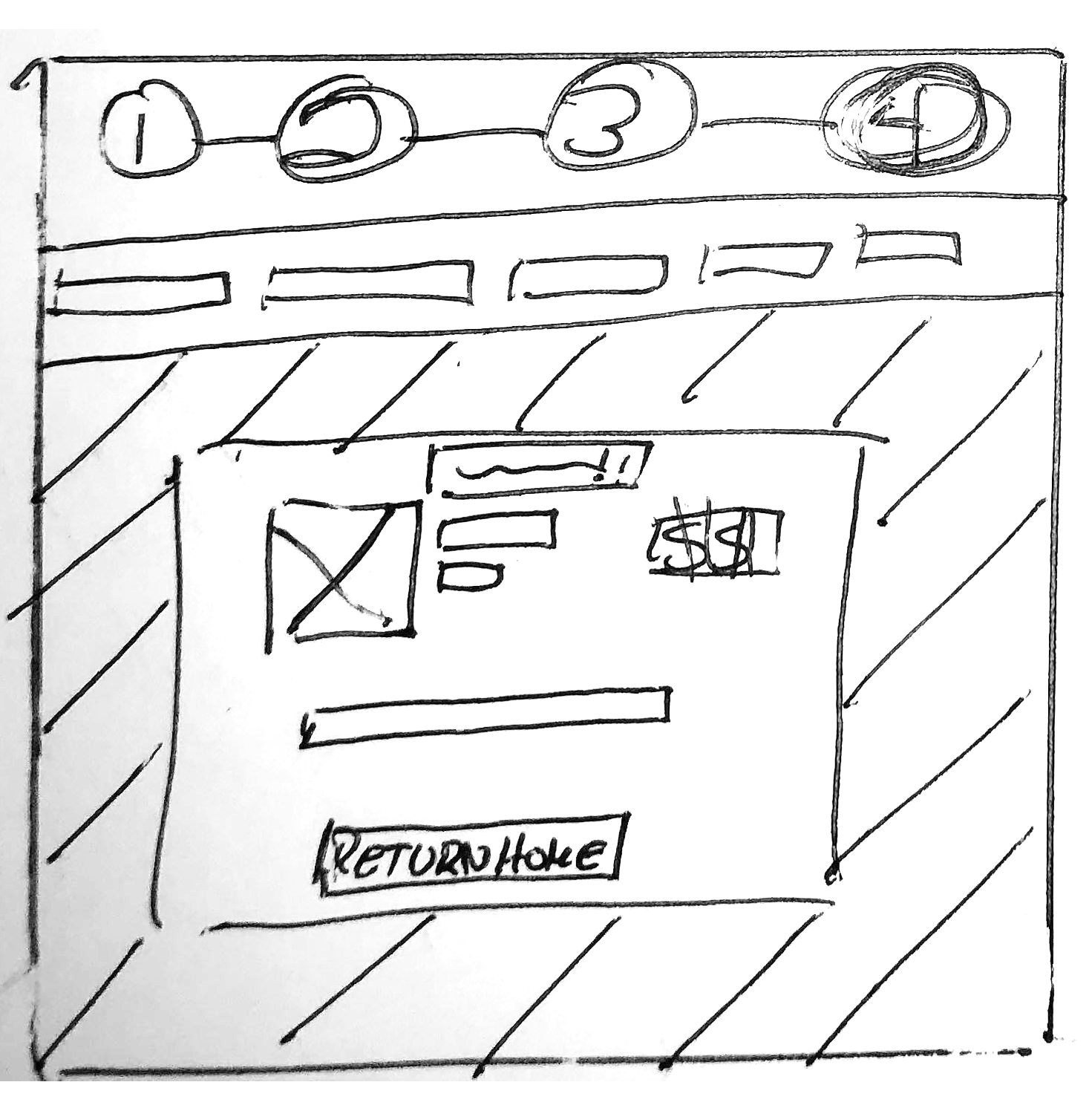
With all the data ready to go, some prototypes were generated quickly for user testing to measure how successful the design was in guiding the user through the site.
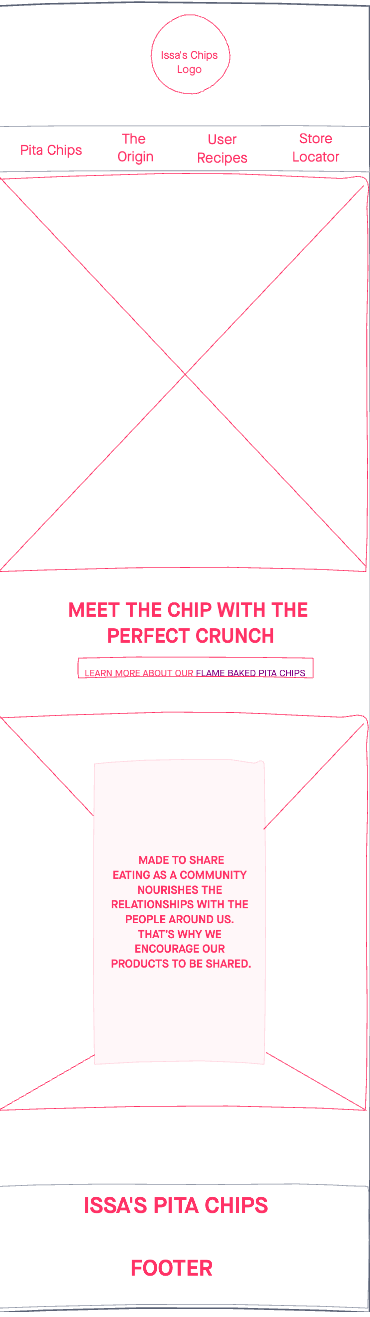
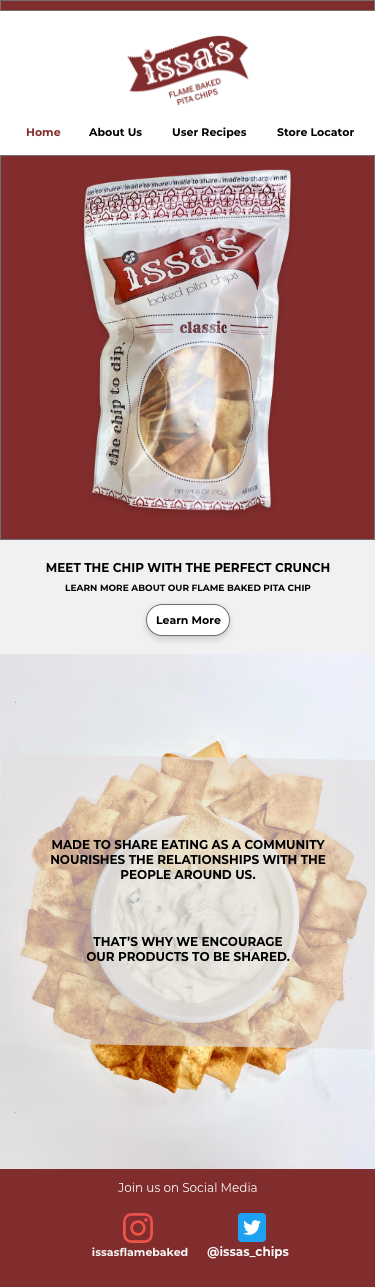
Finally, after all the feedback gathered from the previous testing. A final version of the new Issas' Chips website was created.